
Logo of BillHog

BillHog

Invoices your customers make themselves

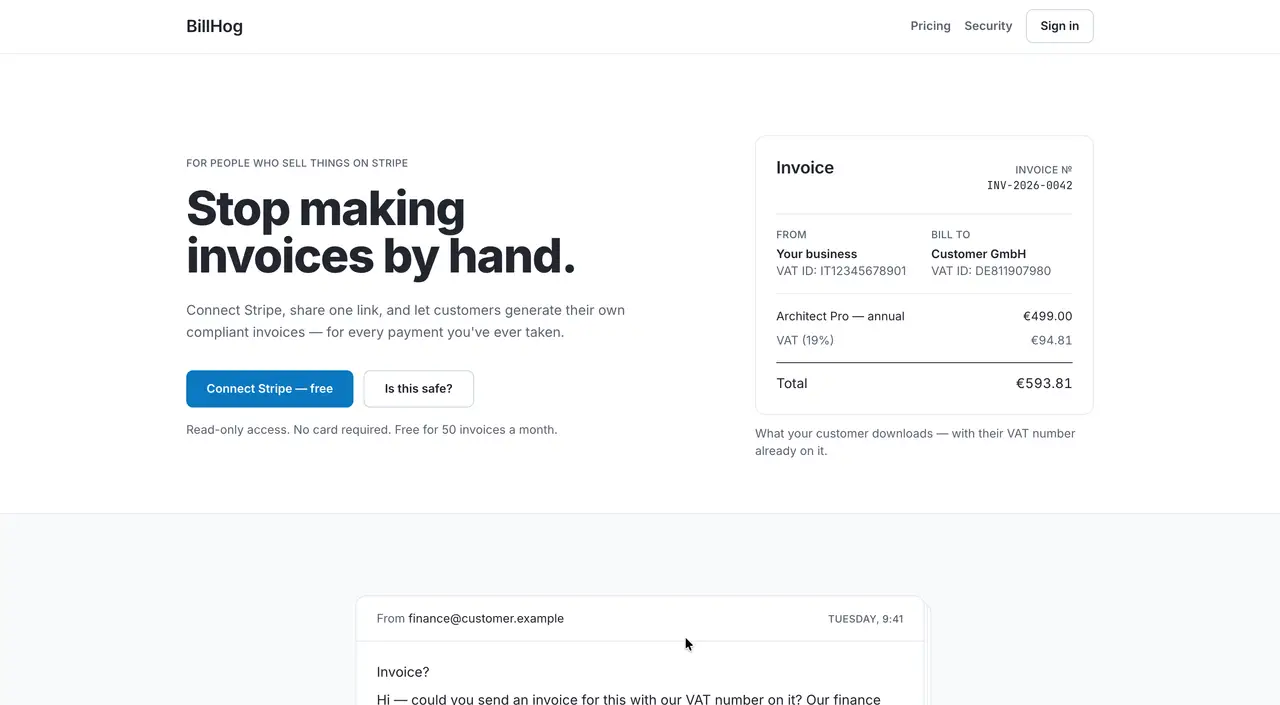
You know the email. A customer pays, then asks for an invoice with their VAT number on it, because their finance system won't accept a Stripe receipt. You dig through Stripe, discover the invoice can't be edited after issue, and hand-make a PDF. Ten minutes, plus the hour of focus it costs. It happens more often as you grow.

BillHog is one link. Connect Stripe with a restricted, read-only key β€” no code, no webhooks. Paste the link into your receipt email. Customers verify their email, see only their own payments, add their company details, and download the invoice themselves.

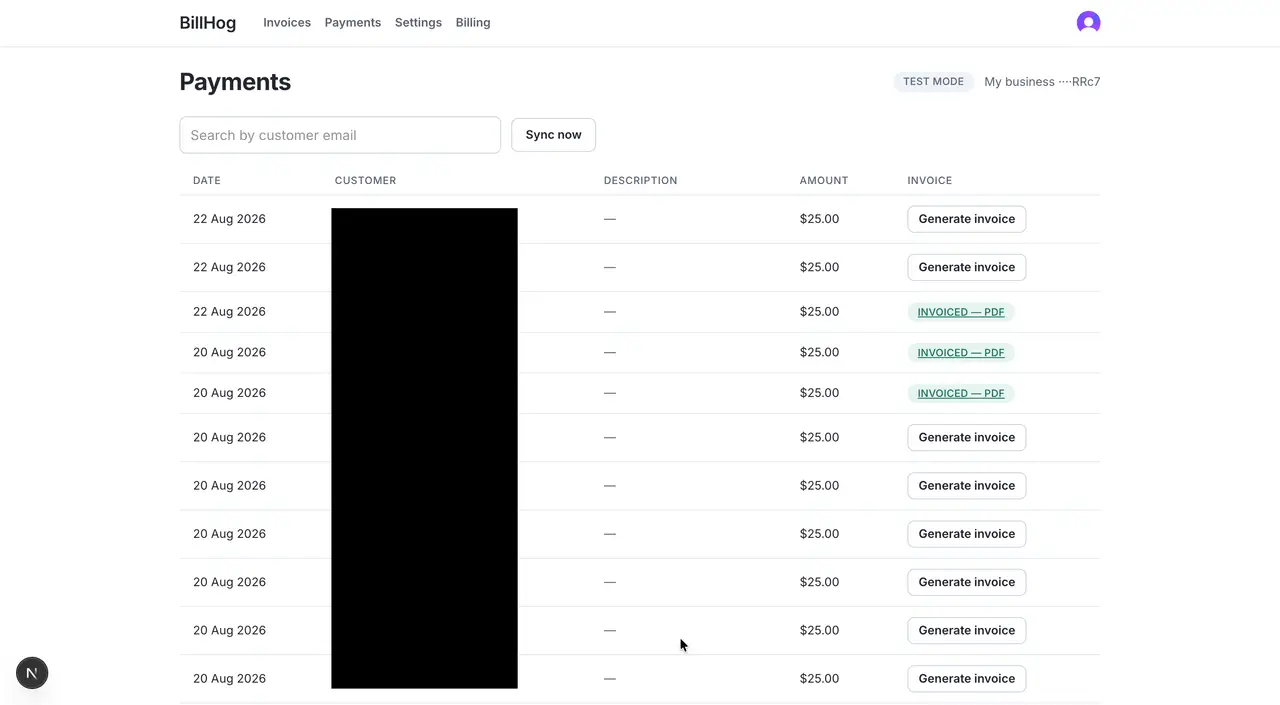
It works on everything you've already sold. Connect and your entire payment history is instantly invoice-ready. No migration, no cutoff date.

  • Self-serve portal β€” one link, no accounts for your customers

  • Your whole history β€” every charge, retroactively, including the ones from two years ago

  • Editable after issue β€” a customer who mistypes their VAT number can fix it; the invoice number stays the same

  • Automatic delivery β€” invoices arrive the moment a payment succeeds, before anyone thinks to ask

  • CSV export β€” your accountant gets a file, you get your Sunday back

Free for 50 invoices a month. Pro is $12/month flat β€” unlimited invoices, no BillHog footer, automatic delivery. Stripe charges 0.4% per invoice, forever, to render the same PDF.


About BillHog

BillHog is a development product listed on Uneed, with a free tier and paid plans. It's tagged with Development, Invoicing. See the best Development products for related options.

Frequently asked questions about BillHog

What is BillHog?

BillHog is invoices your customers make themselves.

Is BillHog free?

BillHog offers a free tier with paid plans available for additional features.

What are alternatives to BillHog?

Discover similar development, invoicing products in the Uneed directory.

What category does BillHog belong to?

BillHog is listed under Development on Uneed.

What users say about BillHog

amitfeldmanhq

Self-serve invoicing is a smart wedge β€” making the customer do the data entry removes the worst part of billing. And the auth foundation here is done right: Clerk running as a proper production instance (live keys, dedicated clerk.trybillhog.com domain), which is rarer than it should be in launch cohorts. The rest of the basics hold too: HSTS two-year with includeSubDomains, X-Frame-Options DENY, nosniff, strict-origin-when-cross-origin, robots.txt sensibly fencing off /i/, /dashboard and /api/ while the sitemap stays clean, ~250ms TTFB.Passive launch-day check (headers + public HTML only), two findings:There is no Content-Security-Policy anywhere β€” not on the landing, not on /pricing, not even on the 404 page. For a product whose whole job is rendering customer-facing invoice pages (the /i/ routes you've disallowed in robots.txt), that's the one header I'd want most: invoice views mix your markup with arbitrary customer-supplied data (names, line items, notes), which is exactly the XSS surface CSP exists to contain. A starter policy (default-src 'self') is a one-line header on Vercel and can go out in Report-Only first if you want to watch violations before enforcing.Permissions-Policy is missing β€” the other standard one-liner. An invoicing app never needs camera, microphone or geolocation; locking them off (camera=(), microphone=(), geolocation=()) costs nothing and removes a whole class of "why is the browser asking for that" support tickets.Minor observation: every route, landing included, responds with access-control-allow-origin: *. Harmless on static pages with no credentials involved, but it's the kind of global header that quietly lands on API routes later β€” worth scoping before /api/ grows.Happy to re-check free of charge once a CSP ships β€” the rest of the header set is already solid, so this is the gap that stands out.

Read all 1 review